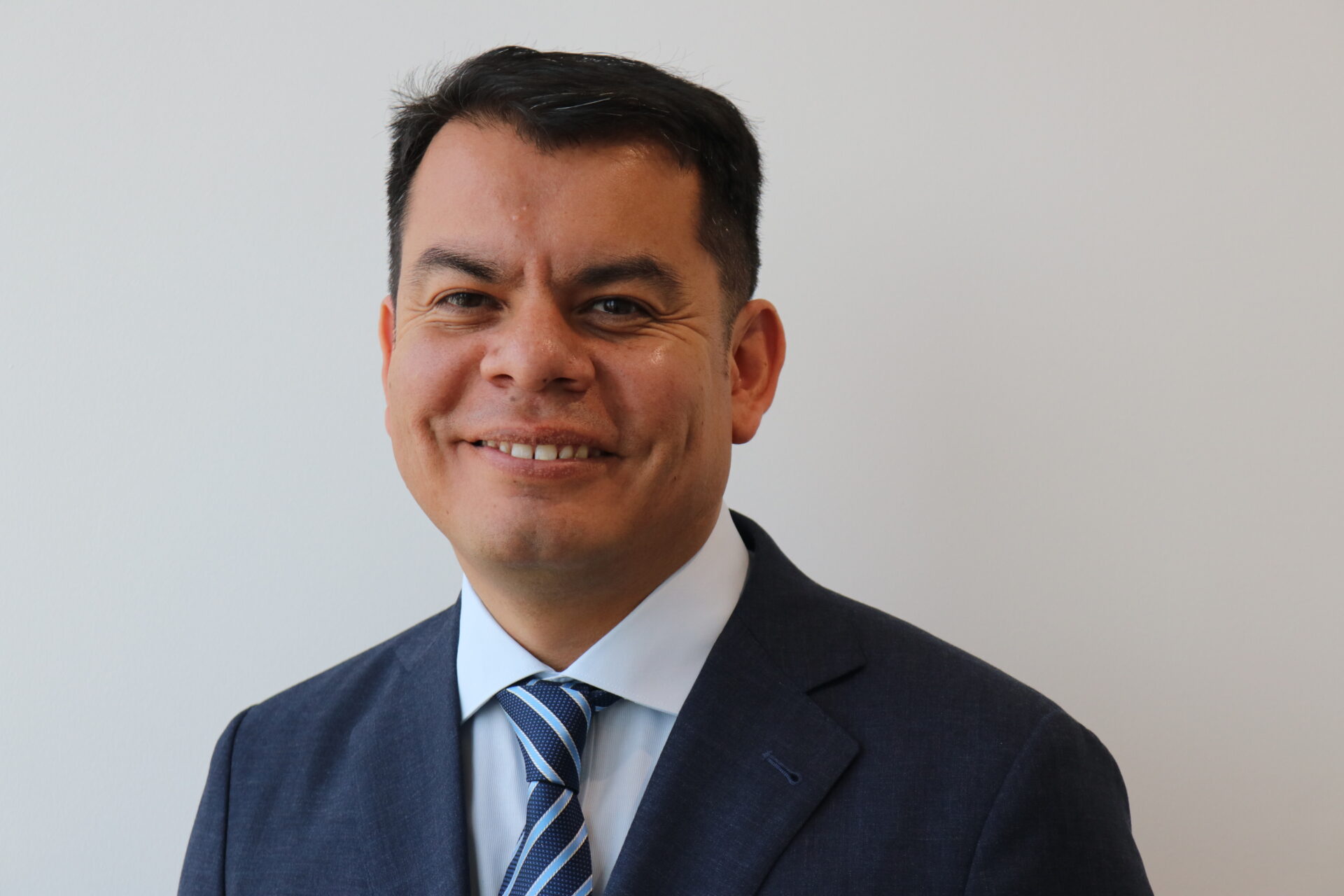
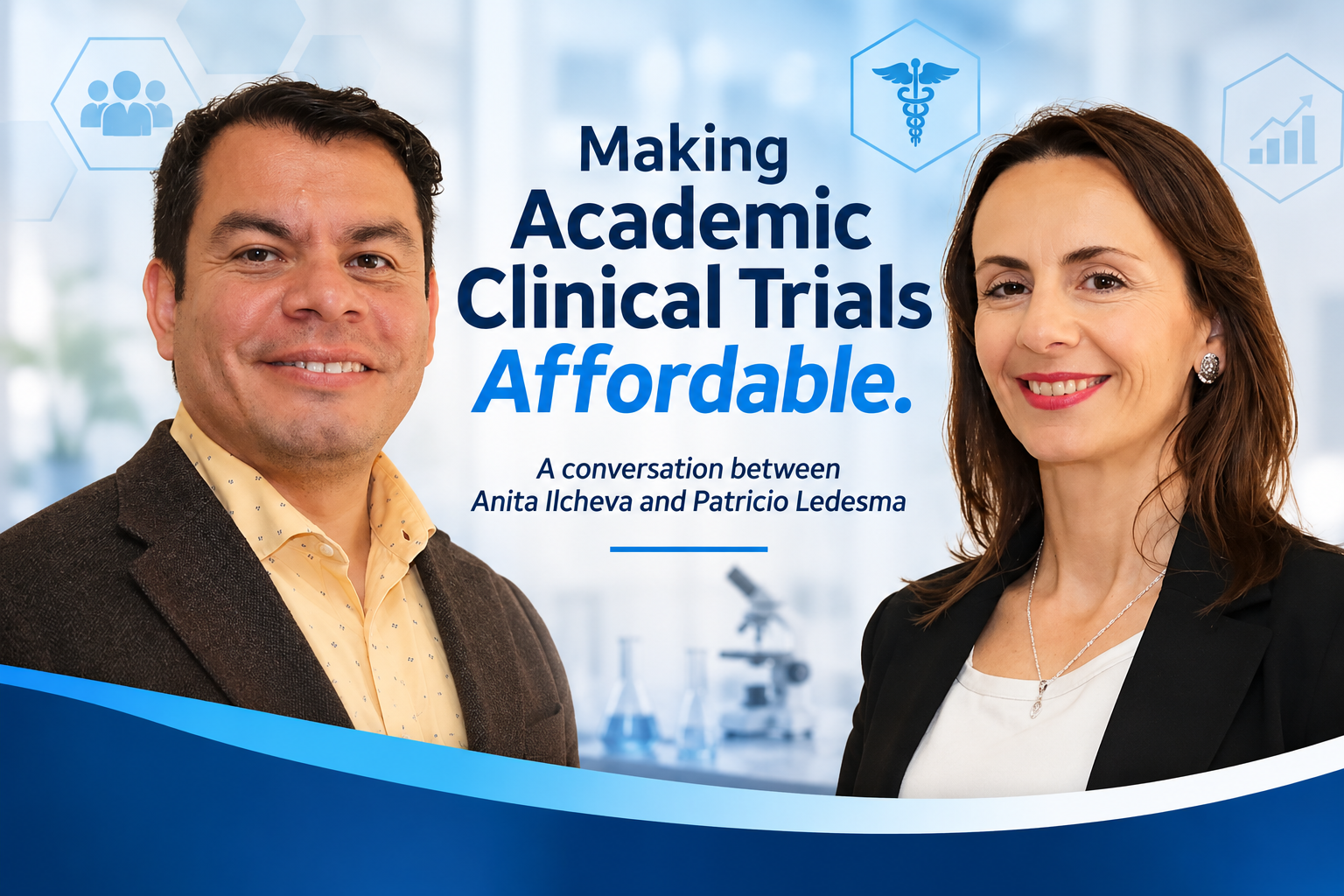
A Conversation Between Anita Ilcheva, Chief Financial Officer at Sofpromed, and Patricio Ledesma, Founder and CEO
Anita Ilcheva:
Hello everyone.
I am Anita Ilcheva, Chief Financial Officer at Sofpromed.
Today, I am joined by Patricio Ledesma, Founder and CEO of Sofpromed.
Patricio has spent more than 15 years helping sponsors conduct clinical trials, including many academic studies in oncology and rare diseases.
One challenge comes up repeatedly: funding.
Academic investigators often have excellent scientific ideas, but limited budgets.
Today, we will discuss the financial challenges faced by academic sponsors and some of the lessons learned over the years regarding cost-efficient clinical trial management.
Welcome, Patricio.
Anita Ilcheva:
Patricio, let's start with the fundamentals. What are the main financial challenges that academic sponsors face when conducting clinical trials?
Patricio Ledesma:
The biggest challenge is almost always budget limitations.
Most academic clinical trials are funded through grants, foundations, institutional funding, or charitable organizations.
Unlike large pharmaceutical companies, academic investigators often do not have access to unlimited resources.
They need to make every dollar count.
At the same time, regulatory expectations continue to increase.
Academic sponsors still need:
- Ethics submissions
- Competent authority approvals
- Monitoring
- Data management
- Statistical analysis
- Pharmacovigilance
- Quality assurance
The requirements are very similar to commercial studies.
The difference is that academic sponsors frequently have budgets that are only a fraction of those available to industry sponsors.
Over the years, I have learned that success comes from designing studies intelligently and focusing resources where they generate the greatest value.
Anita Ilcheva:
After more than 15 years running clinical trials, what would you consider the single most important lesson regarding cost control?
Patricio Ledesma:
Without hesitation, I would say planning.
Poor planning is incredibly expensive.
Many sponsors try to save money during the planning phase.
Unfortunately, the opposite often happens.
A protocol amendment can cost hundreds of thousands of dollars.
Adding sites late in the study can dramatically increase costs.
Rebuilding databases or modifying statistical analysis plans after study initiation can be costly and time-consuming.
The most efficient studies invest heavily in good planning.
This includes:
- Feasibility assessment
- Operational risk assessment
- Budget forecasting
- Data collection optimization
- Recruitment planning
Every hour spent planning can save dozens of hours later.
Anita Ilcheva:
Many of our academic clients work in oncology. Cancer studies are often complex and expensive. How can costs be reduced without compromising quality?
Patricio Ledesma:
That is an excellent question.
My first recommendation is to focus on high-performing sites.
Many sponsors assume they need more sites.
In reality, they need better sites.
I have seen studies where 20% of sites recruited 80% of patients.
Maintaining underperforming sites generates significant expenses.
Second, simplify the protocol when scientifically possible.
Every unnecessary visit adds cost.
Every unnecessary procedure increases burden.
Every unnecessary data point must eventually be monitored and analyzed.
Third, leverage existing hospital infrastructure.
Academic oncology centers often already have:
- Qualified investigators
- Research nurses
- Imaging departments
- Biobanks
- Laboratory capabilities
Using established infrastructure can generate substantial savings.
Anita Ilcheva:
Technology platforms can represent a significant budget item. How has Sofpromed approached this challenge for academic clients?
Patricio Ledesma:
This is an area where we have worked very hard over the years.
Many traditional technology solutions are designed primarily for large pharmaceutical companies.
Academic studies often need the same functionality but at a lower cost.
At Sofpromed, we have focused on providing technology solutions that combine quality with affordability.
For example, we have implemented cost-efficient solutions for:
- Electronic Data Capture (EDC)
- ePRO systems
- Trial Master Files
- Medical coding
- Clinical trial management
- Data review
The key principle is simple.
Academic sponsors should not pay enterprise-level pricing when a more efficient solution can achieve the same scientific and regulatory objectives.
Our goal has always been to provide fit-for-purpose technology.
Technology that supports compliance.
Technology that improves efficiency.
And technology that respects academic budgets.
Anita Ilcheva:
Could you share some examples of areas where Sofpromed has generated cost savings for academic oncology studies?
Patricio Ledesma:
Absolutely.
Several areas come to mind.
First, centralized management.
Having multiple vendors often creates duplication of effort.
When Sofpromed provides integrated services, communication becomes more efficient.
Second, flexible staffing models.
Academic studies frequently do not require full-time resources in every functional area.
Providing flexible resource allocation helps optimize budgets.
Third, biometrics efficiency.
Our data management, biostatistics, and statistical programming teams frequently develop pragmatic solutions tailored to academic requirements.
Fourth, risk-based monitoring approaches.
Not every study requires the same monitoring intensity.
By assessing risks appropriately, monitoring resources can be allocated more effectively.
Finally, experience matters.
Many avoidable costs originate from operational mistakes.
Sponsors benefit when they work with teams that have already navigated similar challenges.
Anita Ilcheva:
Some people assume lower cost automatically means lower quality. What is your view?
Patricio Ledesma:
I completely disagree with that assumption.
There is a huge difference between reducing costs and reducing quality.
Reducing quality is unacceptable.
Reducing inefficiency is smart.
For example:
- Automating repetitive tasks
- Simplifying workflows
- Using experienced teams
- Selecting productive sites
- Avoiding unnecessary vendors
These measures can reduce costs significantly while maintaining high quality.
In many cases, efficiency actually improves quality.
The objective should always be value.
Not simply spending less.
Anita Ilcheva:
If an academic investigator approached you tomorrow with a new oncology study, what advice would you give?
Patricio Ledesma:
I would offer three recommendations.
First, define the essential scientific objectives.
Do not overload the protocol with secondary questions that dramatically increase complexity.
Second, involve operational experts early.
Clinical operations, data management, regulatory affairs, and statistics teams should contribute during protocol development.
Third, think about recruitment from day one.
Many successful studies fail because recruitment was underestimated.
If recruitment is delayed, costs increase.
If recruitment succeeds, everything else becomes easier.
Closing Remarks
Anita Ilcheva:
Patricio, thank you for sharing your insights.
Today's discussion highlighted several important lessons for academic sponsors.
Good planning reduces costs.
Protocol simplicity improves efficiency.
Technology can be affordable without sacrificing quality.
And experience helps avoid expensive mistakes.
Patricio Ledesma:
Thank you, Anita.
Academic research plays a critical role in advancing medicine.
Many important discoveries begin in investigator-initiated studies and academic institutions.
Our mission at Sofpromed is to help researchers bring those innovations to patients while managing resources responsibly.
With the right strategy, high-quality clinical trials can be conducted efficiently, even within limited budgets.
Anita Ilcheva:
Thank you for joining us.
We hope this discussion was useful for academic investigators, research institutions, and biotech leaders seeking practical ways to manage clinical trial costs while maintaining quality.
See you next time.