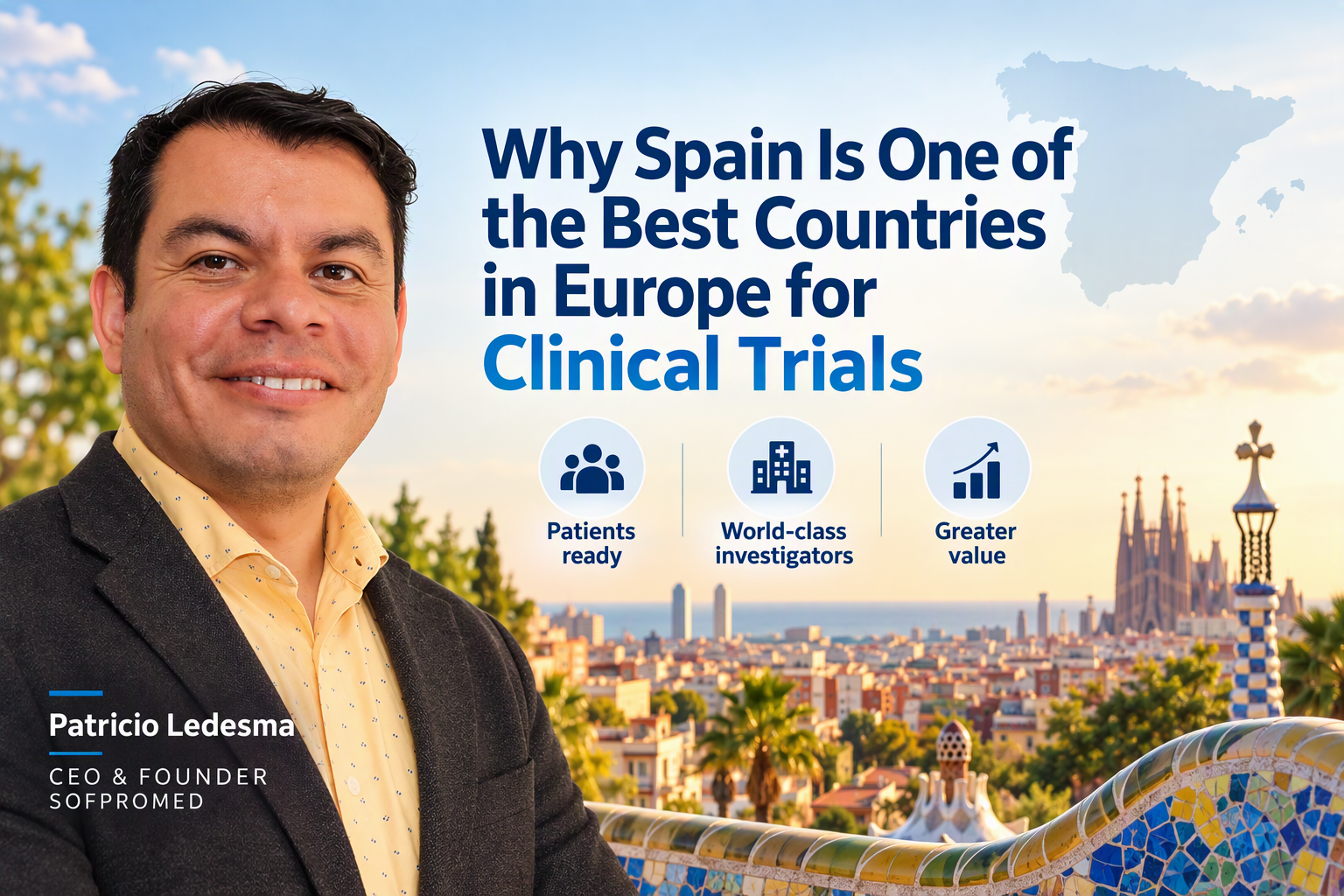
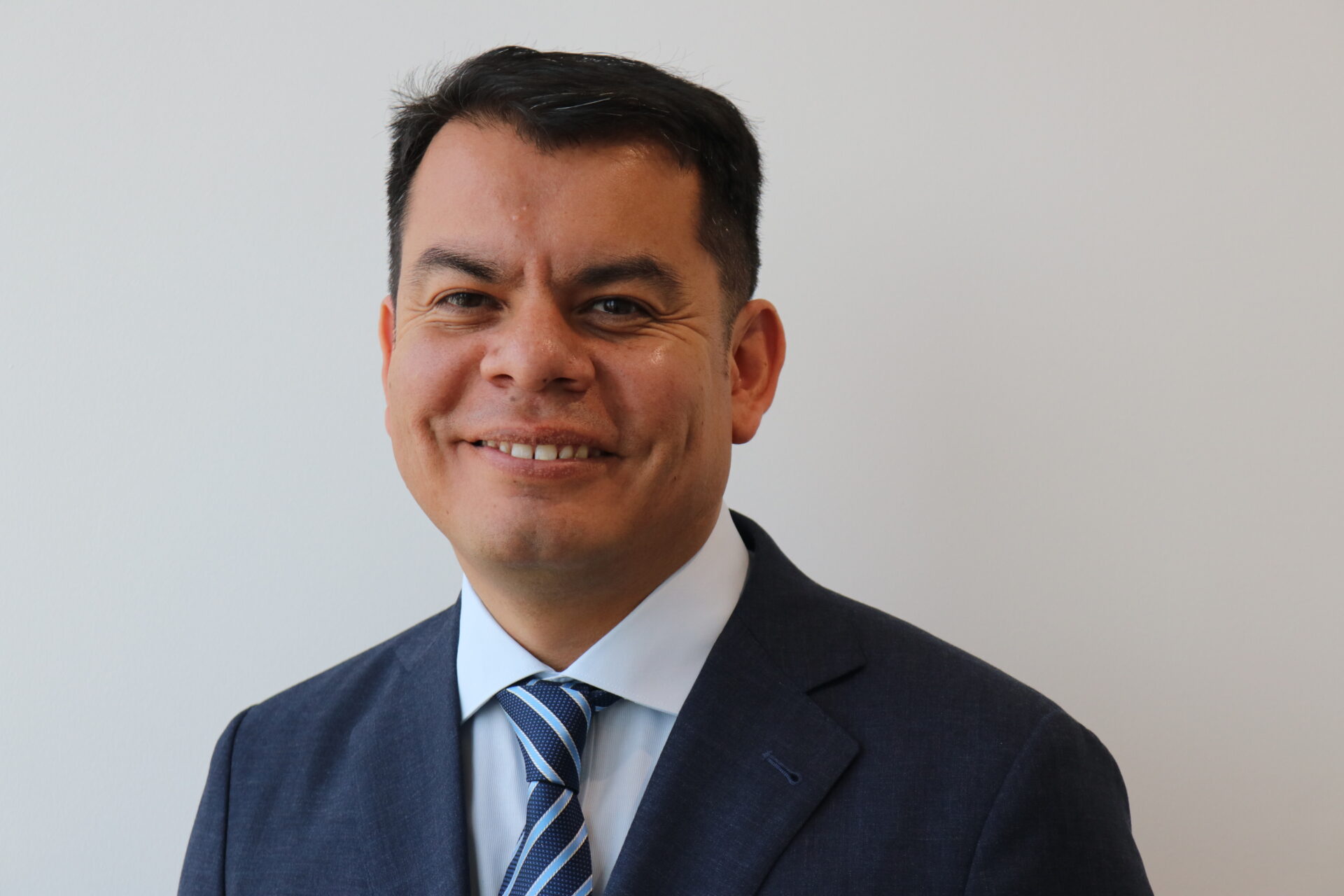
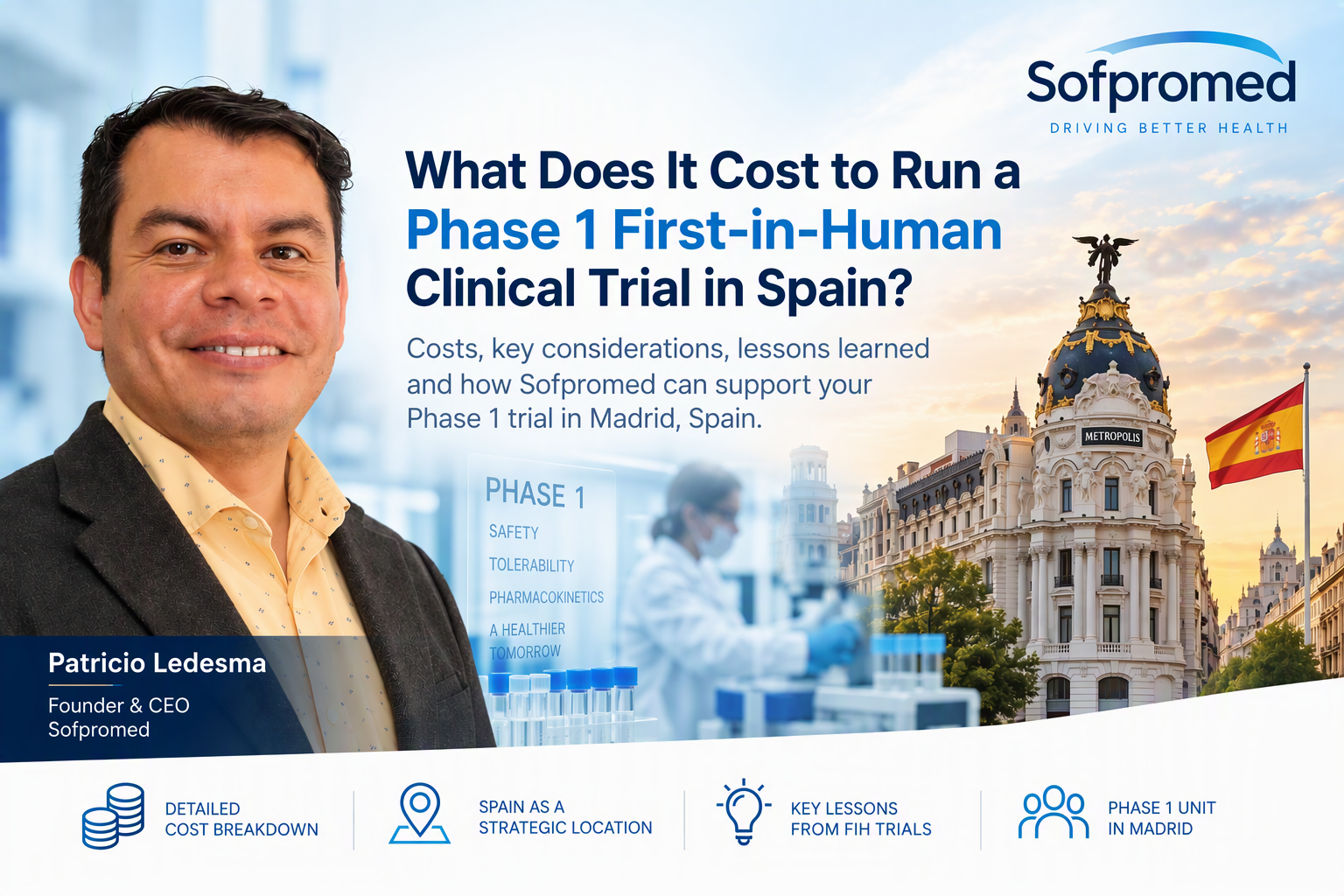
By Patricio Ledesma, CEO & Founder of Sofpromed
Table of Contents
When biotech companies prepare to bring a promising new therapy into humans for the first time, one of their first questions is straightforward:
How much does a Phase 1 First-in-Human (FIH) clinical trial cost?
Having worked with numerous biotechnology sponsors, clinical research organizations, and specialized Phase 1 units across Europe, I can say that there is no single answer.
The cost depends on the complexity of the investigational product, the study design, the number of cohorts, pharmacokinetic requirements, biomarker analyses, and the operational strategy selected.
However, Spain has become one of the most attractive destinations in Europe for conducting First-in-Human studies due to its combination of high-quality investigators, modern clinical pharmacology units, rapid recruitment capabilities, and competitive pricing compared to many Northern European countries and the United States.
In this article, I will explain the major cost drivers of an FIH trial, provide realistic budget ranges, discuss lessons learned from early-phase development, and explain how Sofpromed can support sponsors through access to a specialized Phase 1 unit in Madrid, Spain.
What Is a First-in-Human (FIH) Clinical Trial?
A First-in-Human trial represents the first administration of an investigational medicinal product to human subjects.
The main objectives typically include:
- Safety assessment
- Tolerability evaluation
- Pharmacokinetics (PK)
- Pharmacodynamics (PD)
- Dose escalation
- Maximum tolerated dose identification
- Recommended Phase 2 dose determination
Most FIH studies are conducted in:
- Healthy volunteers
- Special populations
- Oncology patients (for anticancer therapies)
- Rare disease patients
Because no human safety data are yet available, these studies require highly specialized facilities and experienced investigators.
Typical Cost Components of a Phase 1 FIH Trial
The overall budget is composed of multiple components.
Table 1. Main Cost Categories
| Cost Category | Typical Cost Range (€) |
| Study design and medical writing | 20,000 - 80,000 |
| Regulatory submissions | 10,000 - 40,000 |
| Ethics committee fees | 3,000 - 10,000 |
| Clinical pharmacology unit fees | 150,000 - 700,000 |
| Investigator fees | 20,000 - 80,000 |
| Volunteer recruitment | 20,000 - 200,000 |
| Screening procedures | 10,000 - 100,000 |
| Laboratory testing | 25,000 - 250,000 |
| Bioanalytical assays | 50,000 - 500,000 |
| Pharmacokinetic analysis | 15,000 - 100,000 |
| Data management | 15,000 - 60,000 |
| Biostatistics | 10,000 - 50,000 |
| Medical monitoring | 20,000 - 75,000 |
| Pharmacovigilance | 15,000 - 80,000 |
| Clinical project management | 25,000 - 150,000 |
| Monitoring activities | 20,000 - 100,000 |
| Insurance | 5,000 - 30,000 |
| Final clinical study report | 15,000 - 60,000 |
Estimated Total Cost by Trial Complexity
The most important cost driver is complexity.
Table 2. Total FIH Trial Cost Estimates
| Study Type | Estimated Cost (€) |
| Simple SAD study (Single Ascending Dose) | 350,000 - 800,000 |
| SAD + MAD study | 700,000 - 1.8 million |
| FIH oncology study | 1.5 - 5 million |
| FIH biologic / monoclonal antibody | 1 - 3 million |
| Cell therapy FIH trial | 2 - 10 million+ |
| Gene therapy FIH trial | 5 - 20 million+ |
A standard healthy volunteer SAD/MAD program frequently falls between €700,000 and €1.5 million depending on the number of cohorts and analytical requirements.
Why Spain Is a Cost-Effective Location for FIH Studies
Over the past decade, Spain has become one of Europe's preferred destinations for early-phase clinical development.
Several factors contribute to this advantage.
- Competitive Clinical Unit Costs
Compared with the United States, United Kingdom, Germany, or Scandinavia, Spain generally offers lower operational costs while maintaining excellent quality standards.
Sponsors often achieve meaningful savings without compromising data quality or patient safety.
- Highly Experienced Investigators
Spain has accumulated substantial experience in:
- Oncology
- Immunology
- CNS development
- Rare diseases
- Cell and gene therapies
Many investigators have participated in international FIH programs sponsored by global pharmaceutical companies.
- Strong Regulatory Environment
The Spanish Agency of Medicines and Medical Devices (AEMPS) is widely respected throughout Europe for its experience with innovative development programs.
Spain has developed a reputation for supporting clinical research while maintaining a strong focus on participant safety.
- Access to Large Recruitment Networks
Rapid recruitment can significantly reduce study timelines.
For biotechnology companies dependent on investor milestones, reducing development timelines may be equally important as reducing direct costs.
Hidden Costs Sponsors Often Underestimate
One lesson I have observed repeatedly is that sponsors frequently focus only on the clinical unit budget.
In reality, delays often arise from:
Protocol amendments
A poorly designed protocol may require modification after study initiation.
This can add:
- Additional regulatory submissions
- Vendor delays
- Increased operational costs
Bioanalytical assay development
Developing and validating a robust assay frequently takes longer than anticipated.
For novel molecules, assay development may become a critical path activity.
Dose escalation committee meetings
These safety reviews are often underestimated in planning and budgeting.
Data review cycles
Clean PK and safety data are essential before progressing to the next dose cohort.
Sponsors should budget sufficient time and resources for rapid data review.
Key Lessons Learned by Patricio Ledesma From First-in-Human Trials
Having worked with early-stage biotechnology companies and development programs over many years, several lessons consistently emerge.
Lesson 1: Start with Risk Assessment
The most successful programs begin with a thorough review of:
- Nonclinical toxicology
- Pharmacology
- Safety pharmacology
- Target biology
A strong risk mitigation strategy improves both safety and operational efficiency.
Lesson 2: Simplicity Wins
Complex protocols often appear attractive in theory.
In practice, overly complicated designs frequently generate:
- Recruitment delays
- Protocol deviations
- Operational challenges
Simple, well-designed studies generally execute faster and provide cleaner data.
Lesson 3: Select the Right Clinical Unit
The cheapest site is rarely the most economical option.
An experienced Phase 1 unit can:
- Recruit faster
- Execute procedures more efficiently
- Reduce deviations
- Improve data quality
This often lowers the overall development cost despite higher initial fees.
Lesson 4: Plan Bioanalysis Early
Many development timelines become constrained by laboratory activities rather than clinical execution.
Assay readiness should be addressed months before first patient first visit.
Lesson 5: Build an Experienced Team
Early-phase development requires close coordination among:
- Physicians
- Pharmacologists
- Biometrics specialists
- Regulatory experts
- Safety professionals
Experienced teams can identify problems before they become costly delays.
How Sofpromed Supports Phase 1 Clinical Trials in Spain
At Sofpromed, we understand that emerging biotechnology companies need both scientific expertise and financial efficiency.
Through our network of qualified partners, we can support sponsors with access to a specialized Phase 1 clinical research unit in Madrid, Spain, suitable for:
- First-in-Human trials
- Single Ascending Dose studies
- Multiple Ascending Dose studies
- Food effect studies
- Drug-drug interaction studies
- Bioavailability and bioequivalence studies
- Pharmacokinetic programs
In addition to access to Phase 1 facilities, Sofpromed can provide:
- Study feasibility assessments
- Clinical operations
- Project management
- Monitoring
- Medical monitoring
- Pharmacovigilance
- Data management
- Biostatistics
- Regulatory submissions
- Medical writing
- Vendor management
This integrated approach enables biotechnology sponsors to work with a single experienced partner throughout the clinical development process.
Conclusion
For most biotechnology companies, a typical First-in-Human trial in Spain will require an investment ranging from approximately €700,000 to €2 million, while more complex oncology, biologic, cell therapy, or gene therapy studies may require substantially larger budgets.
The key to controlling costs is not selecting the lowest-priced provider. Instead, success comes from selecting experienced partners, designing efficient protocols, planning bioanalytical activities early, and conducting studies in specialized Phase 1 units capable of delivering high-quality data.
From my experience, Spain continues to offer one of the best combinations of quality, regulatory expertise, recruitment capabilities, and cost efficiency for sponsors seeking to advance innovative therapies into human clinical development.
If your organization is planning a First-in-Human study and evaluating options in Europe, Sofpromed would be pleased to discuss how our Phase 1 capabilities in Madrid can help accelerate your program while maintaining the highest scientific and operational standards.