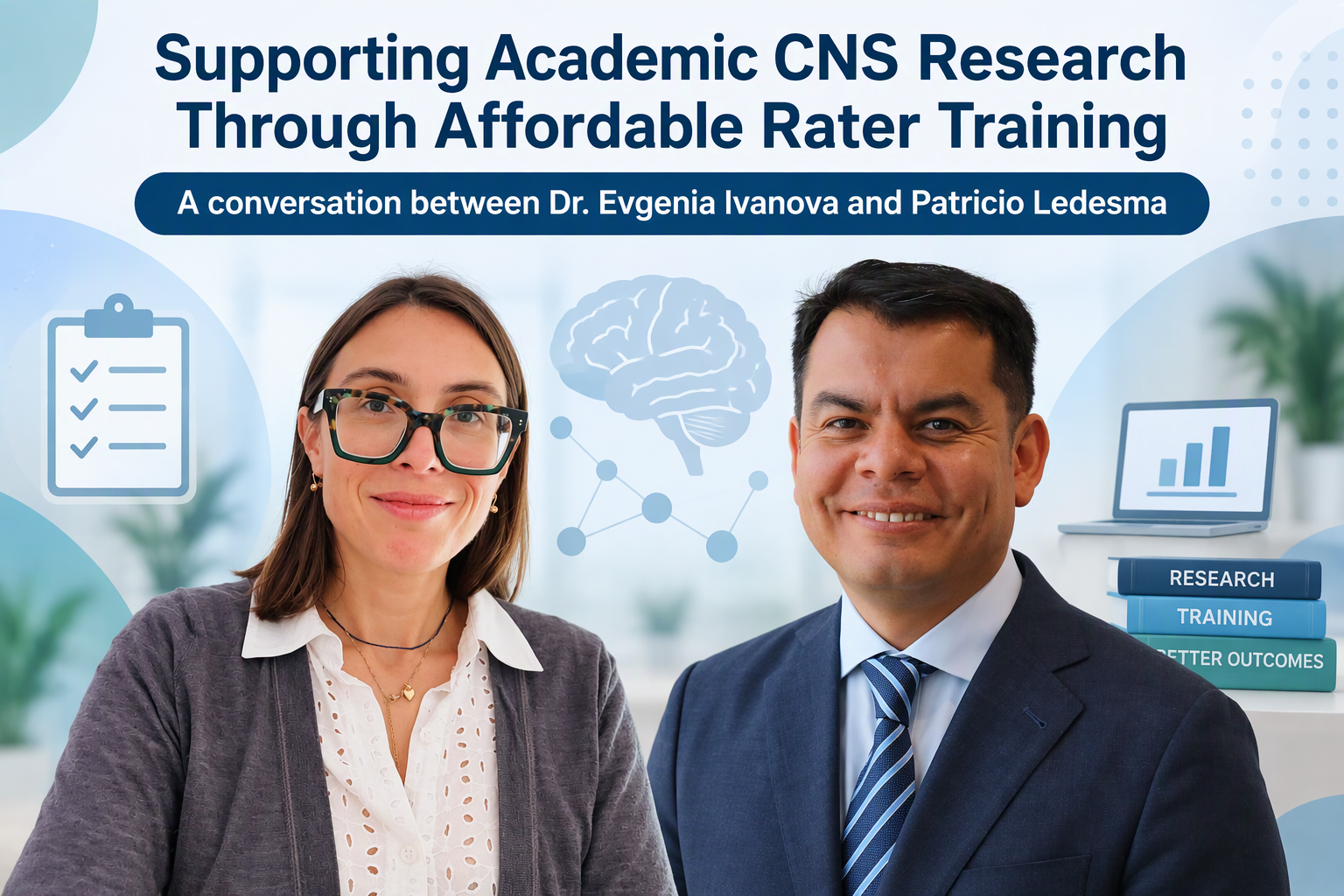
A conversation between:
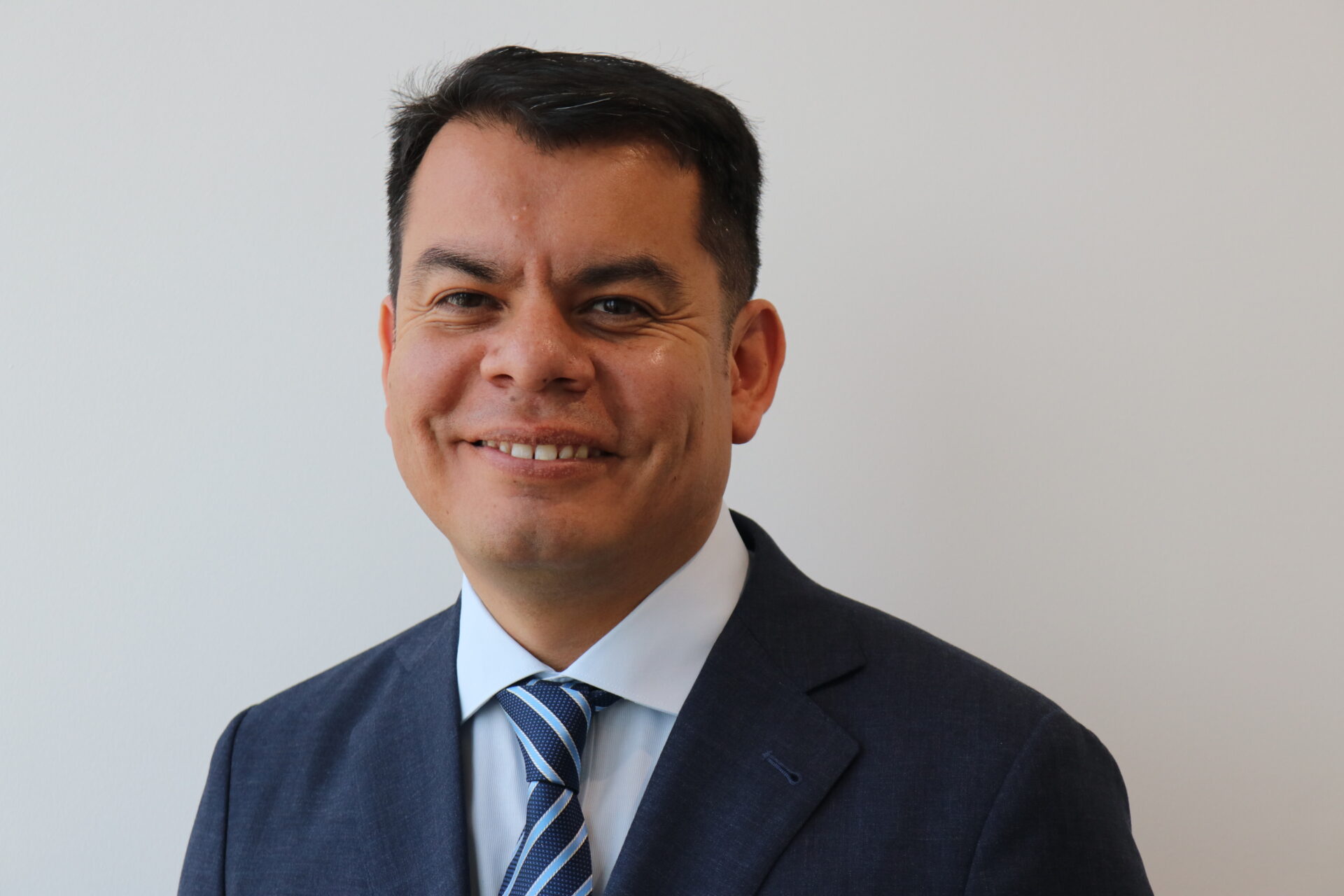
- Patricio Ledesma, CEO & Founder, Sofpromed
- Dr. Evgenia Ivanova, Rater Training Director, Sofpromed
Patricio Ledesma:
Evgenia, thank you for joining me today. Over the last few years, I have noticed increasing interest from academic institutions looking for CNS rater training support. However, many investigator-led research groups seem to face unique challenges compared with pharmaceutical sponsors. What are you seeing in the market?
Dr. Evgenia Ivanova:
Thank you, Patricio.
I completely agree. Academic institutions are conducting some of the most important neuroscience research worldwide, particularly in areas such as Alzheimer's disease, Parkinson's disease, depression, schizophrenia, bipolar disorder, autism spectrum disorders, and rare neurological diseases.
The challenge is that academic studies often operate with significantly smaller budgets than commercial pharmaceutical trials. At the same time, they are expected to maintain the same standards of data quality, regulatory compliance, and scientific rigor.
This creates a situation where investigators need expert CNS rater training, certification, and ongoing support, but they must achieve these goals with limited resources.
Patricio Ledesma:
What would you say are the most common training needs among academic CNS research groups?
Dr. Evgenia Ivanova:
There are several recurring needs.
The first is initial rater certification. Before enrolling patients, investigators must demonstrate that they can administer and score rating scales consistently.
The second is inter-rater reliability. Academic sponsors want confidence that raters across different sites are evaluating patients in a comparable manner.
The third is rater drift prevention. Many CNS studies last several years, and without ongoing calibration, even experienced raters can gradually move away from standardized assessment practices.
Finally, we see increasing demand for:
- Multi-language training
- Remote training solutions
- eCOA training
- Refresher courses
- Re-certification programs
These services are becoming increasingly important as academic CNS studies become more international and technologically advanced.
Patricio Ledesma:
Why is rater training particularly important in CNS research compared with other therapeutic areas?
Dr. Evgenia Ivanova:
Because many CNS endpoints are subjective.
In oncology, for example, a CT scan may objectively measure tumor size. In CNS research, however, key endpoints often depend on clinician-administered assessments.
Let's look at a few examples:
|
Indication |
Common Rating Scales |
|
Depression |
HAM-D, MADRS |
|
Schizophrenia |
PANSS, CGI |
|
Alzheimer's Disease |
ADAS-Cog, CDR |
|
Parkinson's Disease |
MDS-UPDRS |
|
Bipolar Disorder |
YMRS |
|
Autism |
ABC, CGI-I |
The reliability of the entire study may depend on how consistently these assessments are administered and scored.
Even small differences between raters can increase variability, reduce statistical power, and potentially make it more difficult to demonstrate treatment effects.
That is why well-designed rater training programs are so important.
Patricio Ledesma:
Many academic investigators assume that professional rater training services are only affordable for large pharmaceutical companies. Is that still true?
Dr. Evgenia Ivanova:
Not at all.
Historically, some rater training providers primarily focused on large commercial sponsors and global pharmaceutical trials.
However, I believe academic institutions deserve access to the same level of expertise.
The important thing is building training programs that fit the specific needs of the study.
An academic Phase II study involving five sites should not necessarily receive the same service package as a large multinational pharmaceutical program involving hundreds of sites.
At Sofpromed, we focus on tailoring our approach so that academic sponsors receive exactly what they need without paying for unnecessary complexity.
Patricio Ledesma:
That flexibility is something I believe differentiates Sofpromed. In your opinion, why is Sofpromed particularly well positioned to support academic CNS research?
Dr. Evgenia Ivanova:
I believe there are several reasons.
First, Sofpromed has extensive experience working with investigator-initiated trials, academic institutions, and biotech companies.
Second, because Sofpromed is also a clinical research organization, we understand the operational realities of clinical trials. We know how raters, coordinators, investigators, monitors, and sponsors interact throughout a study.
Third, our organizational structure allows us to be far more agile than many larger providers.
And finally, we can provide expert-level services while maintaining a cost structure that is attractive to budget-conscious academic sponsors.
Patricio Ledesma:
Let's talk about your personal experience. What makes you a strong fit to lead CNS rater training initiatives at Sofpromed?
Dr. Evgenia Ivanova:
My professional career has been heavily focused on CNS clinical research, psychological assessment methodologies, investigator training, and quality improvement initiatives.
Over the years, I have worked extensively with CNS rating scales, investigator qualification programs, certification processes, and rater performance management.
What I enjoy most is helping researchers generate reliable clinical data.
Every accurate patient assessment contributes to better scientific outcomes.
When we improve rater consistency, we improve the quality of the entire study.
That is extremely rewarding.
Patricio Ledesma:
Many academic institutions are now conducting multinational studies. How does Sofpromed support international academic collaborations?
Dr. Evgenia Ivanova:
This is an area where Sofpromed offers substantial value.
We can support:
- International certification programs
- Virtual training sessions
- Multi-language delivery
- Standardized training materials
- Ongoing global calibration exercises
- Re-certification management
Academic networks increasingly involve investigators from different countries, and maintaining consistency across sites is critical.
Our international capabilities help ensure that all raters are following the same standards regardless of location.
Patricio Ledesma:
One concern I hear frequently is that CNS studies are becoming more digital. Are academic institutions prepared for this transition?
Dr. Evgenia Ivanova:
The transition is happening rapidly.
More studies are using:
- Electronic Clinical Outcome Assessments (eCOA)
- Hybrid trial models
- Remote patient assessments
- Electronic diaries
- Centralized data review systems
Many investigators are excellent clinicians but may have limited experience with these technologies.
Training therefore has to cover both the rating scale itself and the digital platform used to administer it.
This is another area where Sofpromed can provide valuable support by combining clinical expertise with practical operational training.
Patricio Ledesma:
If you could give one piece of advice to academic investigators preparing a CNS trial, what would it be?
Dr. Evgenia Ivanova:
Invest in training earlier than you think you need to.
Many sponsors focus heavily on protocol development and site activation, but underestimate the impact that rater variability can have on study outcomes.
A strong training program implemented from the beginning can save significant time, resources, and frustration later.
Good assessments lead to good data.
Good data leads to better science.
And ultimately, better science benefits patients.
Patricio Ledesma:
Final question. Why should academic institutions consider Sofpromed as their CNS rater training partner?
Dr. Evgenia Ivanova:
Because we combine three things that academic institutions are often looking for but rarely find together:
- CNS expertise
- High-quality training programs
- Budget-conscious delivery
Our goal is not simply to certify raters.
Our goal is to help academic researchers generate reliable, reproducible, and scientifically meaningful clinical data.
We understand the realities of limited budgets, grant-funded programs, and investigator-led studies, and we design our services accordingly.
Academic institutions deserve a partner that understands both the science and the financial realities of clinical research.
I believe Sofpromed is exactly that partner.
Patricio Ledesma:
Thank you, Evgenia.
At Sofpromed, we are proud to support universities, hospitals, research networks, and investigator-led groups conducting important CNS research worldwide. Through Dr. Evgenia Ivanova's leadership and our broader clinical research expertise, we are committed to providing affordable, high-quality CNS rater training solutions that help academic institutions improve data quality, reduce variability, and maximize the value of their research budgets.