
By Patricio Ledesma, Founder and CEO, Sofpromed
Table of Contents
I'm Patricio Ledesma.
Today I want to answer a very common question.
Do clinical trial recruitment advertisements need IRB approval in the United States?
The short answer is:
Yes.
In most cases.
Recruitment materials are considered part of the informed consent and subject recruitment process.
The FDA and IRBs pay close attention to them.
Let's see what the regulations say.
What Is a Recruitment Advertisement?
A recruitment advertisement is any material used to recruit study participants.
Examples include:
- Facebook ads
- Google ads
- YouTube ads
- Newspaper ads
- Radio ads
- Website banners
- Flyers
- Posters
- Patient brochures
The format does not matter.
If the purpose is recruitment, it is usually considered advertising.
Does FDA Require IRB Review?
Yes.
According to FDA guidance:
The IRB should review recruitment procedures and recruitment materials before they are used.
This includes advertisements intended to recruit subjects into a clinical trial.
Official Reference
FDA Information Sheet Guidance for IRBs and Clinical Investigators:
"Advertising for Study Subjects."
The FDA states that recruitment advertisements should be reviewed as part of the IRB's responsibilities for protecting human subjects.
Why Does the IRB Review Ads?
The goal is simple.
Protect potential study participants.
The IRB wants to ensure that advertisements:
- Are accurate
- Are not misleading
- Do not overpromise benefits
- Do not minimize risks
- Do not create undue influence
Patient protection always comes first.
What Information Can Be Included?
According to FDA guidance, recruitment materials may include factual information.
Examples:
Table 1: Acceptable content for recruitment materials
| Information Type | Generally Acceptable |
| Study title | Yes |
| Study purpose | Yes |
| Disease being studied | Yes |
| Basic eligibility criteria | Yes |
| Study location | Yes |
| Contact information | Yes |
| Time commitment | Yes |
| Compensation information | Yes |
Source: FDA IRB Information Sheet Guidance.
What Should NOT Be Included?
This is where sponsors often make mistakes.
Table 2: Common problems in recruitment ads
| Statement | FDA Concern |
| "New breakthrough treatment" | Implies effectiveness |
| "Best treatment available" | Promotional claim |
| "Guaranteed improvement" | Misleading |
| "Safe and effective" | Not yet established |
| "Free treatment" | May overemphasize benefit |
These claims may improperly influence patients.
The FDA specifically warns against implying that the investigational product is known to be safe or effective.
Can Payment Be Mentioned?
Yes.
Compensation can be described.
However:
The payment should not be presented as an incentive that overwhelms a person's ability to make a voluntary decision.
The IRB will often review:
- Amounts
- Payment schedule
- Wording
For example:
Better Wording
"Participants may receive up to $500 for time and travel."
Riskier Wording
"Earn $500 fast by joining this study."
The first is factual.
The second may create undue influence.
What About Social Media Advertising?
This is especially important today.
Many studies recruit through:
- YouTube
- TikTok
The same principles apply.
The platform does not change the regulatory requirements.
The IRB generally reviews:
- Text
- Images
- Videos
- Landing pages
- Digital banners
Everything seen by potential participants.
What Does OHRP Say?
The Office for Human Research Protections (OHRP) also considers recruitment materials part of the subject selection process.
OHRP guidance states that IRBs should review recruitment methods and materials to ensure ethical enrollment practices.
This is particularly important in vulnerable populations.
Examples include:
- Children
- Cognitively impaired subjects
- Economically disadvantaged populations
FDA Examples of Acceptable Recruitment Language
Let's look at examples.
Acceptable
"Researchers are conducting a study of an investigational treatment for migraine."
Acceptable
"Participants must be between 18 and 65 years old."
Acceptable
"Study-related procedures will be provided at no cost."
These statements are factual.
FDA Examples of Problematic Language
Not Recommended
"Try a promising new cure."
Not Recommended
"Be among the first to benefit from a breakthrough treatment."
Not Recommended
"Safe new therapy available now."
These statements imply efficacy or safety.
Those claims have not yet been established.
Practical Sponsor Checklist
Before launching recruitment advertisements, I recommend confirming the following:
Table 3: Sponsor compliance checklist
| Requirement | Complete? |
| IRB approval obtained | □ |
| Final advertisement version controlled | □ |
| Contact information verified | □ |
| Compensation wording reviewed | □ |
| No efficacy claims included | □ |
| No safety claims included | □ |
| Social media content reviewed | □ |
| Screenshots archived | □ |
Key Regulations and Guidance Documents
FDA Regulations
21 CFR 50 Protection of Human Subjects.
21 CFR 56 Institutional Review Boards.
FDA Guidance
Recruiting Study Subjects - Information Sheet Guidance for IRBs and Clinical Investigators
OHRP Guidance
Institutional Review Board Guidebook
These documents form the foundation for recruitment advertising review in U.S. clinical trials.
Key Takeaways
Let's summarize.
Do recruitment advertisements require IRB approval?
Generally:
Yes.
Before use.
Recruitment materials should be:
- Accurate
- Balanced
- Non-promotional
- Non-coercive
They must not:
- Promise benefits
- Exaggerate effectiveness
- Minimize risks
- Create inappropriate pressure to participate
Good recruitment starts with ethical communication.
And ethical communication protects patients.
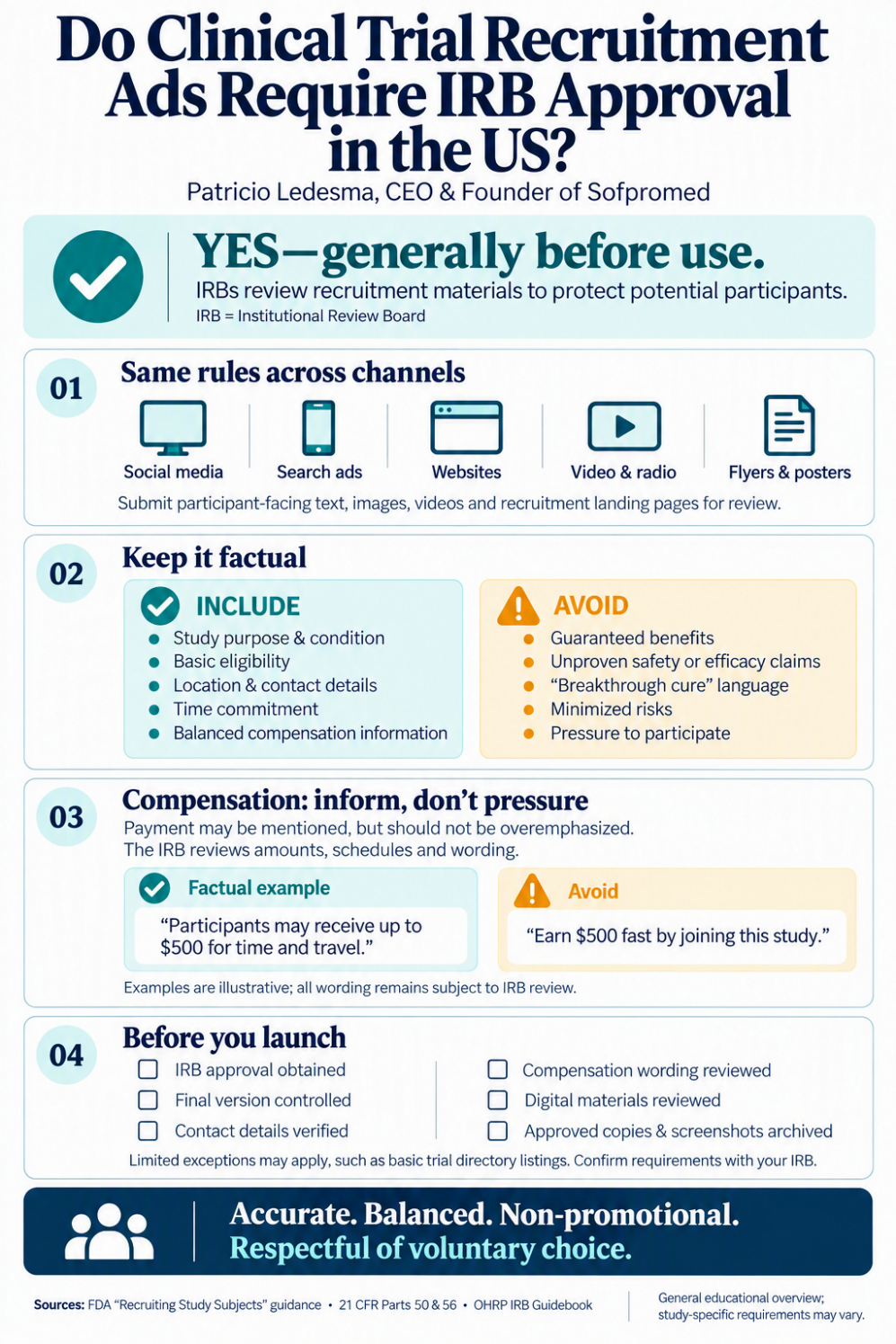
Figure 1: Key aspects regarding clinical trial recruitment ads in the United States
Conclusion
If your company is planning patient recruitment activities for a clinical trial, make sure your advertisements are reviewed by your IRB before launch.
A compliant recruitment strategy can prevent regulatory findings and protect patient trust.