
By Patricio Ledesma, Founder and CEO, Sofpromed
Table of Contents
I'm Patricio Ledesma.
Today I want to answer a very common question:
How long does an IND amendment take with the FDA?
The answer is:
It depends on the type of amendment.
And many people are surprised to learn that not all IND amendments require waiting for FDA approval before implementation.
Let's look at what the regulations actually say.
What Is an IND Amendment?
An IND is an Investigational New Drug application.
Once an IND is active, sponsors often need to make changes.
Examples include:
- New protocols
- New clinical studies
- Manufacturing changes
- New safety information
- Investigator updates
These changes are generally submitted as IND amendments.
FDA Citation
The FDA describes amendments to an IND under:
21 CFR 312.30 - Protocol Amendments
21 CFR 312.31 - Information Amendments
21 CFR 312.32 - IND Safety Reports
Protocol Amendments
Let's begin with protocol amendments.
These are among the most common submissions.
Examples include:
- New clinical protocols
- New study arms
- Changes in eligibility criteria
- Significant protocol modifications
According to FDA regulations:
Sponsors should submit protocol amendments before implementing the changes.
However, unlike the original IND submission:
There is generally no requirement to wait 30 days after submitting a protocol amendment before proceeding.
The FDA may review the amendment and provide comments later.
FDA Citation
21 CFR 312.30(b) states that a sponsor shall submit a protocol amendment describing any new protocol or significant protocol change.
Practical Timeline
For most protocol amendments:
- Submission: Day 0
- Study activities may often proceed after submission
- FDA review may occur over the following weeks or months
The exact timing depends on the complexity of the change.
Information Amendments
Some amendments simply provide new information.
Examples include:
- New laboratory findings
- Additional pharmacology data
- Chemistry updates
- Manufacturing information
These are called Information Amendments.
FDA Citation
21 CFR 312.31
The regulation allows sponsors to submit important new information that is relevant to the IND.
Typical Timeline
Most information amendments do not trigger a formal FDA approval process.
The agency reviews the information as part of its ongoing oversight of the IND.
Safety Amendments and IND Safety Reports
Patient safety always comes first.
If an important safety issue is identified, sponsors must act quickly.
Examples include:
- Serious adverse events
- Unexpected toxicities
- New safety findings from related studies
FDA Citation
According to 21 CFR 312.32:
Sponsors must rapidly report certain serious and unexpected suspected adverse reactions.
Typical Timeline
Some reports must be submitted:
- Within 7 calendar days
- Within 15 calendar days
depending on the nature of the safety finding.
These timelines are regulatory reporting requirements, not FDA review timelines.
Manufacturing Changes (CMC Amendments)
Now let's discuss manufacturing changes.
These can be more complicated.
Examples:
- New manufacturing site
- New formulation
- Process changes
- Changes in raw materials
- New stability data
The FDA carefully evaluates whether these changes affect:
- Safety
- Identity
- Strength
- Quality
- Purity
- Potency
FDA Citation
CMC updates are commonly submitted under:
21 CFR 312.31 (Information Amendments)
The specific content requirements are also addressed throughout 21 CFR Part 312.
Typical Timeline
Minor changes may receive little FDA feedback.
Major changes may generate:
- Information requests
- Clarification requests
- Safety questions
Timelines can range from several weeks to several months.
When Does the 30-Day FDA Review Clock Apply?
This is where many sponsors become confused.
The famous 30-day waiting period usually applies to:
The original IND submission.
FDA Citation
Under 21 CFR 312.40(b):
A clinical investigation may begin 30 days after FDA receives the IND unless FDA notifies the sponsor otherwise.
This regulation applies primarily to the initial IND.
It does not automatically apply to every amendment submitted afterward.
That is a very important distinction.
Could an Amendment Trigger a Clinical Hold?
Yes.
The FDA can place a study on clinical hold if significant concerns arise.
FDA Citation
21 CFR 312.42 - Clinical Holds
Reasons may include:
- Human subject safety concerns
- Insufficient information
- Manufacturing concerns
- Unreasonable risk
If a clinical hold is issued, implementation timelines become much longer.
The sponsor must address all FDA concerns before moving forward.
Realistic Planning for Sponsors
When planning your study timelines, I recommend:
For simple amendments:
- Plan for administrative review only.
For moderate amendments:
- Build in several weeks for potential FDA questions.
For major CMC or safety-related amendments:
- Build in several months of contingency.
Never assume that FDA silence means no future questions.
Always be inspection-ready.
Always maintain complete documentation.
Key Takeaways
Let's summarize.
An IND amendment does not have one universal timeline.
Protocol amendments are usually submitted before implementation.
Information amendments generally do not require prior FDA approval.
Safety reports have strict reporting deadlines.
Major manufacturing changes may receive extensive FDA scrutiny.
And remember:
The 30-day waiting period typically applies to the original IND, not to routine IND amendments.
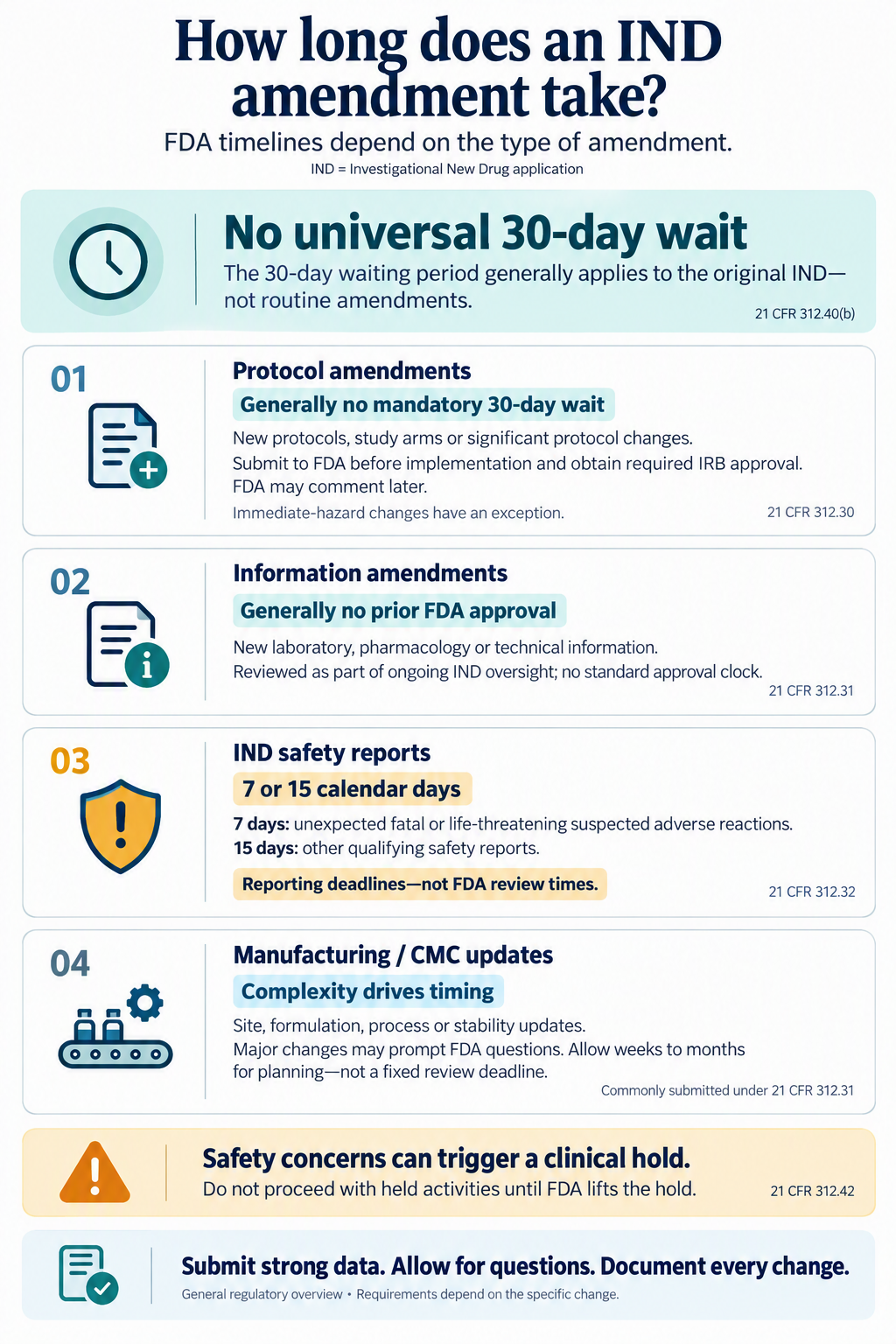
Figure 1: How long does an IND amendment take?
Conclusion
So, what is the timeline for an IND amendment?
The answer depends on the type of amendment and the potential impact on patient safety.
The best strategy is simple:
Prepare high-quality submissions.
Provide strong supporting data.
And anticipate FDA questions before they arise.