
By Patricio Ledesma, Founder and CEO, Sofpromed
Table of Contents
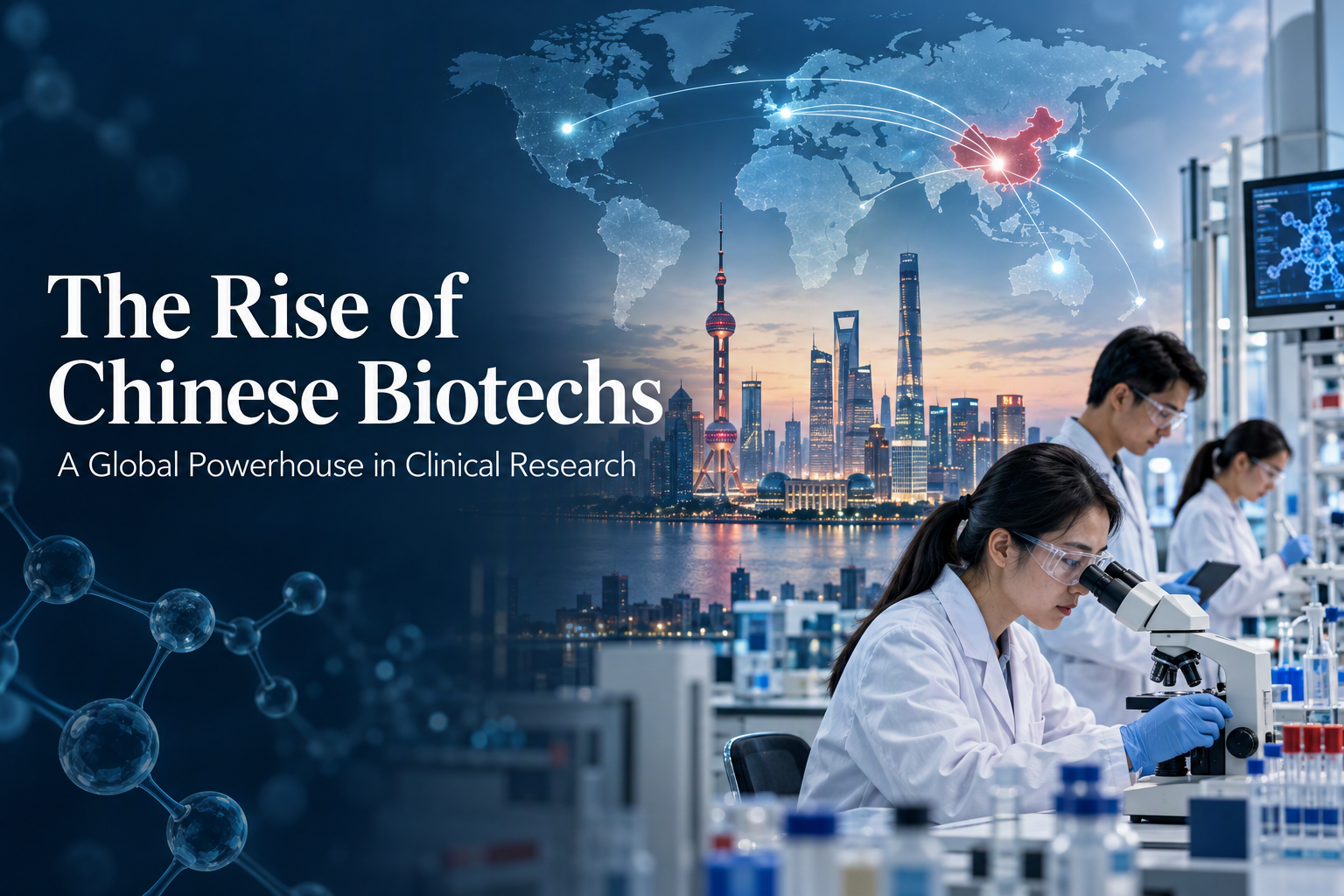
Over the last decade, one of the most important trends in the global pharmaceutical industry has been the rise of Chinese biotechnology companies.
What was once viewed primarily as a manufacturing and outsourcing market has evolved into a major source of innovation, clinical research expertise, and novel drug development.
Today, Chinese biotech companies are competing on a global stage.
They are launching first-in-class therapies, entering major licensing agreements with multinational pharmaceutical companies, conducting multinational clinical trials, and increasingly targeting regulatory approvals in the United States, Europe, Japan, Australia, and other developed markets.
As someone who has spent many years working in the clinical research industry, I believe we are witnessing a historic transformation.
Chinese biotechs are no longer simply participants in the global drug development ecosystem.
They are rapidly becoming leaders.
At Sofpromed, we have worked with biotech sponsors from different regions of the world, including China.
This experience has allowed us to understand the operational, regulatory, and budgetary challenges these organizations face when expanding internationally.
We have learned how to support Chinese biotech companies efficiently and cost-effectively as they conduct trials across North America, Europe, and Asia-Pacific.
China's Transformation into a Biotech Innovation Hub
Twenty years ago, relatively few innovative drugs originated in China.
Most Chinese pharmaceutical companies focused on generic products or manufacturing activities.
That situation has changed dramatically.
According to research published by ICON [1], China now conducts approximately one quarter of the world's clinical trials and contributes roughly 23% of the global innovative drug pipeline.
China has also overtaken the United States in certain measures of new drug development activity.
Several factors have driven this transformation:
- Significant government investment in biotechnology
- Regulatory reforms from China's National Medical Products Administration (NMPA)
- Large pools of scientific talent
- Rapidly growing venture capital investment
- Strong academic research infrastructure
- Increasing collaboration with multinational pharmaceutical companies
The result has been an explosion in biotech innovation.
Key Indicators of China's Biotech Growth
The growth of Chinese biotechnology can be illustrated through several industry indicators.
Table 1. Selected Indicators of China's Biotech Expansion
|
Indicator |
Recent Data |
|
Share of global innovative drug pipeline |
Approximately 23% [1] |
|
Share of global clinical trials |
Approximately 25% [1] |
|
New drugs in development |
Nearly 1,500 candidates [1] |
|
Public biotech research funding (2023) |
At least CNY 20 billion (€2.6 billion) [2] |
|
Chinese biotech leaders confident of reaching next investment milestone |
95% [1] |
|
Chinese biotech leaders confident in product success |
94% [1] |
These figures would have been difficult to imagine only a decade ago.
Why Global Pharmaceutical Companies Are Paying Attention
One of the strongest signals of China's growing importance is the increasing number of licensing and partnership deals between Chinese biotech companies and major multinational pharmaceutical organizations.
Large pharmaceutical companies are actively searching China for innovative assets.
Recent years have seen deals involving organizations such as AstraZeneca, Bristol Myers Squibb, and Ipsen.
According to industry analyses, overseas out-licensing activity by Chinese biotech companies has increased substantially, with 93 Chinese products licensed internationally during the first eight months of 2025 alone [3].
This trend demonstrates that global pharmaceutical companies increasingly recognize China as a source of innovation rather than merely a market.
Therapeutic Areas Driving Chinese Innovation
Chinese biotech companies are particularly active in several high-growth therapeutic areas.
Table 2. Major Focus Areas for Chinese Biotechs
|
Therapeutic Area |
Growth Drivers |
|
Oncology |
Strong scientific ecosystem and large patient populations |
|
Immunology |
High unmet medical needs globally |
|
Cell Therapy |
Government support and advanced manufacturing capabilities |
|
Gene Therapy |
Emerging innovation clusters |
|
Rare Diseases |
Increasing investment and international collaboration |
|
Antibody-Drug Conjugates (ADCs) |
Major licensing activity with multinational pharma |
|
Autoimmune Diseases |
Significant market opportunities worldwide |
Many Western pharmaceutical companies now view Chinese biotech firms as important sources of next-generation oncology and immunology assets.
Chinese Biotechs Are Becoming Global Sponsors
Historically, Chinese biotechnology companies conducted most studies within China.
Today, that model is changing.
Increasingly, Chinese sponsors are conducting:
- Global Phase I studies
- First-in-human programs
- Multiregional clinical trials (MRCTs)
- Bridging studies
- Registration trials supporting FDA approvals
- Registration trials supporting EMA approvals
This evolution is driven by several factors:
- Global commercialization ambitions
- Investor expectations
- Partnering opportunities
- Regulatory requirements
- Access to diverse patient populations
As a result, Chinese biotech sponsors increasingly require experienced global CRO partners.
Expansion into North America
The United States remains the most important pharmaceutical market in the world.
Many Chinese biotech companies now seek:
- FDA IND submissions
- US clinical trial participation
- US key opinion leaders
- US regulatory strategy
- US commercialization partnerships
Conducting trials in North America offers several advantages.
Table 3. Advantages of US Clinical Trial Participation
|
Advantage |
Benefit |
|
FDA recognition |
Facilitates product approval |
|
Access to leading investigators |
Scientific credibility |
|
Strong oncology centers |
Faster recruitment for some indications |
|
Global investor confidence |
Improved fundraising opportunities |
|
Commercial potential |
Largest pharmaceutical market |
However, conducting studies in North America can be expensive.
Chinese biotech sponsors therefore look for operational models that balance quality and cost efficiency.
Expansion into Europe
Europe has become another major destination for Chinese biotechnology companies.
Countries frequently selected include:
- Germany
- Spain
- France
- Italy
- Poland
- Czech Republic
- Netherlands
- Belgium
The implementation of the Clinical Trials Information System (CTIS) and the European Clinical Trials Regulation has created a more harmonized regulatory framework across Europe.
This makes Europe increasingly attractive for multinational studies.
Table 4. Why Chinese Biotechs Choose Europe
|
Reason |
Impact |
|
Diverse patient populations |
Better global data |
|
Strong investigator networks |
High scientific quality |
|
Centralized CTIS process |
Operational efficiency |
|
Competitive recruitment rates |
Faster enrollment |
|
Access to EMA pathway |
European market entry |
Many Chinese sponsors now design studies that include both US and European sites from the beginning.
Asia-Pacific Remains Strategically Important
Beyond China itself, Asia-Pacific continues to represent an important region for clinical development.
Key countries include:
- Australia
- South Korea
- Japan
- Taiwan
- Singapore
- Malaysia
- Thailand
Australia is particularly attractive for early-phase development due to:
- Rapid study startup timelines
- Efficient regulatory pathways
- Experienced investigators
- High-quality clinical infrastructure
Table 5. Common Asia-Pacific Expansion Destinations
|
Country |
Common Trial Types |
|
Australia |
Phase I, First-in-Human |
|
Japan |
Registration studies |
|
South Korea |
Oncology and immunology |
|
Taiwan |
Multiregional studies |
|
Singapore |
Early phase and translational research |
|
Malaysia |
Cost-efficient patient recruitment |
|
Thailand |
Regional enrollment expansion |
Many Chinese biotech companies now use Asia-Pacific countries as part of broader multinational development programs.
Challenges Chinese Biotechs Face When Going Global
International expansion creates tremendous opportunities.
It also introduces new challenges.
Regulatory Complexity
Each region has different requirements:
- FDA regulations
- EMA regulations
- MHRA requirements
- PMDA expectations in Japan
- TGA requirements in Australia
Managing these differences requires experienced support teams.
Operational Coordination
Global studies require:
- Cross-border project management
- Vendor oversight
- Risk management
- Site monitoring
- Pharmacovigilance
- Clinical supply logistics
These operations become increasingly complex as studies expand.
Budget Control
Many emerging biotech companies operate under funding constraints.
Capital efficiency remains critical.
The challenge is balancing:
- Quality
- Speed
- Compliance
- Cost
This is one area where experienced CRO partners can create substantial value.
The Importance of Cost-Efficient Global Clinical Operations
Even highly funded biotech companies are increasingly focused on development efficiency.
Investors want to see:
- Faster timelines
- Lower cash burn
- Better forecasting
- Strong operational execution
Chinese biotech executives often seek partners that can deliver:
- Flexible resourcing models
- Senior expertise
- Lean project teams
- Competitive pricing
These requirements align closely with Sofpromed's operational philosophy.
How Sofpromed Supports Chinese Biotech Companies
At Sofpromed, we understand that many Chinese biotechs face significant challenges when expanding beyond their domestic market.
Global trials require local expertise.
But they also require careful cost management.
Over the years, our team has supported international sponsors across diverse therapeutic areas and geographies.
This experience has helped us understand the specific needs of Chinese biotechnology companies seeking to conduct trials globally.
Our approach focuses on providing:
Global Clinical Operations Support
We help sponsors manage:
- Study startup
- Site identification
- Feasibility assessments
- Clinical monitoring
- Project management
- Vendor oversight
- Data management
- Biostatistics
- Medical writing
Regulatory Support
Our teams can support activities associated with:
- FDA submissions
- European regulatory processes
- CTIS workflows
- Country-specific submissions
- Ethics committee interactions
Flexible Resourcing Models
Many biotechnology companies prefer scalable models rather than large fixed-cost structures.
We can support sponsors through:
- Functional Service Provider (FSP) models
- Full-service support
- Hybrid outsourcing approaches
- Strategic consulting engagements
Competition-Friendly Pricing
One of the priorities for many Chinese biotech companies is maintaining development efficiency without compromising quality.
Because of our lean structure and flexible delivery models, Sofpromed can often provide highly competitive pricing compared with larger multinational CROs while maintaining strong quality standards and experienced senior leadership involvement.
Why Understanding Chinese Sponsors Matters
Working successfully with Chinese biotechnology companies requires more than technical expertise.
It requires understanding:
- Decision-making structures
- Communication preferences
- Development goals
- Investor expectations
- Global partnering strategies
Sponsors expanding internationally often need a CRO partner that understands both the local requirements of North America and Europe and the operational realities of rapidly growing Chinese biotech organizations.
Our experience allows us to bridge these perspectives.
This helps facilitate smoother collaboration and faster execution.
Looking Ahead: The Next Decade of Chinese Biotechnology
The global biotechnology industry is entering a new era.
Many industry observers now view China as a major innovation center rather than an emerging market.
According to industry reports, China contributes nearly a quarter of the global innovative drug pipeline and continues to increase its share of clinical development activity [1].
Meanwhile, international licensing activity continues to grow, with Chinese biotech companies attracting substantial attention from multinational pharmaceutical organizations.
I expect several trends to accelerate over the coming years:
- More Chinese-origin products entering global markets.
- Increased FDA and EMA submissions from Chinese sponsors.
- Greater participation in multinational trials.
- Continued growth in oncology, immunology, cell therapy, and ADC development.
- Expanded strategic partnerships between Chinese and Western pharmaceutical companies.
The companies that successfully build global clinical development capabilities will likely become the next generation of worldwide biotechnology leaders.
Conclusion
The rise of Chinese biotech represents one of the most important developments in modern drug development.
A combination of government investment, scientific talent, regulatory reform, and entrepreneurial ambition has transformed China into a major center of pharmaceutical innovation.
Chinese biotech companies are increasingly conducting multinational clinical trials, pursuing approvals in the United States and Europe, and partnering with leading pharmaceutical companies worldwide.
Today, they are helping shape the future of oncology, immunology, cell therapy, gene therapy, and many other therapeutic areas.
As this international expansion continues, operational excellence and cost efficiency will become even more important.
At Sofpromed, we are proud to support innovative biotechnology companies as they expand globally.
Our experience working with international sponsors, including Chinese biotech organizations, enables us to understand their unique challenges and requirements.
We help sponsors navigate clinical development across North America, Europe, and Asia-Pacific while maintaining a strong focus on quality, flexibility, and reasonable pricing.
The future of biotechnology will be increasingly global.
Chinese biotechs will undoubtedly play a central role in that future, and we look forward to helping them bring innovative therapies to patients around the world.
References:
[1] 2025 China biotech survey report
[2] Lab leader, market ascender: China’s rise in biotechnology